
Many parents ask an important question: what is the best age to start Quran classes for kids? There is no single perfect age for every child. However, many children can begin structured Quran learning between the ages of 4 and 6 with short, simple, and age-appropriate lessons.
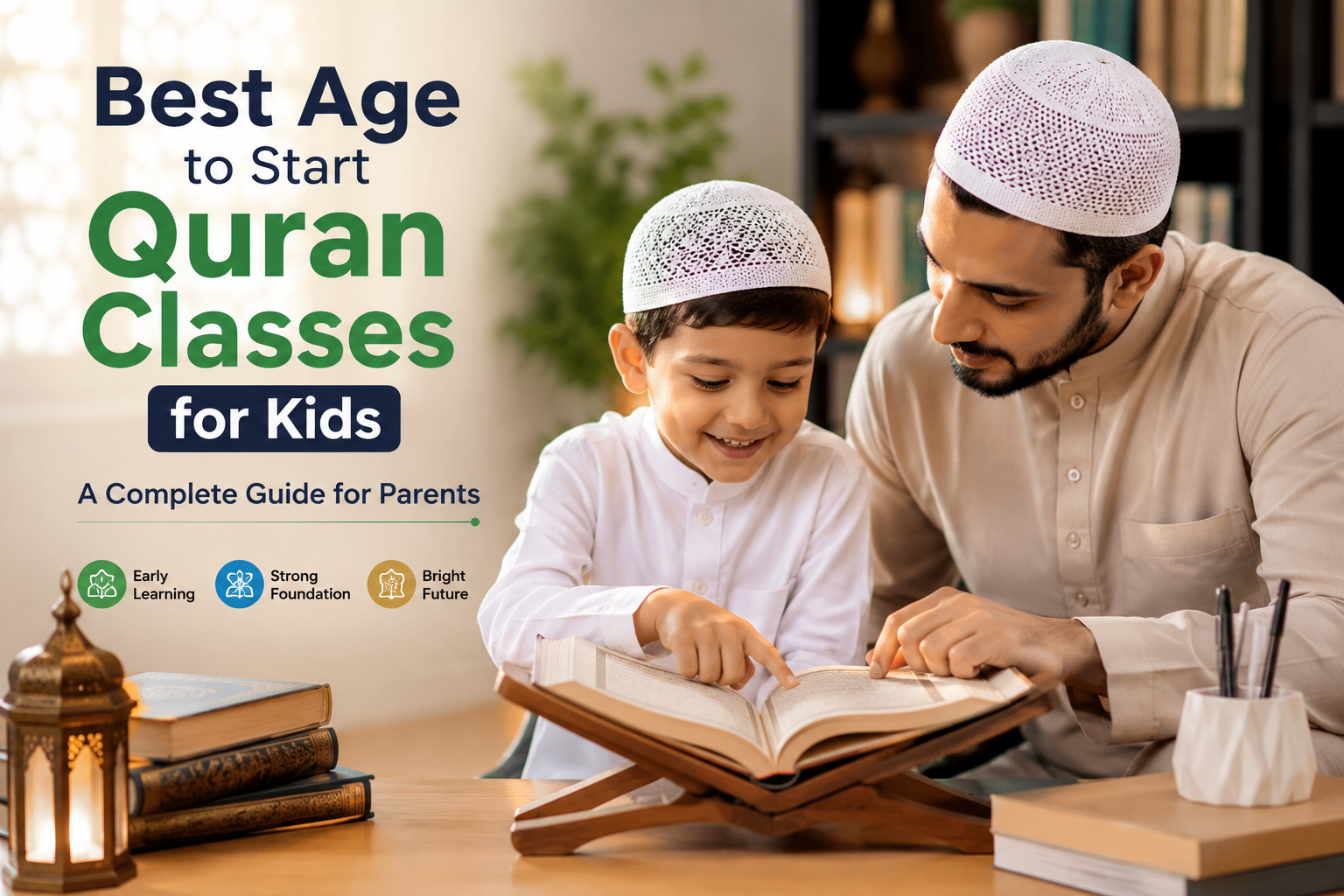
A supportive and comfortable approach can make Quran learning enjoyable for children.
More importantly, parents should consider a child’s attention span, communication skills, interest, and ability to follow simple instructions. Therefore, instead of focusing only on age, it is better to look at whether a child is ready for a positive and consistent learning routine.
In this guide, we will explore the best age to start Quran classes for kids, what children can learn at different ages, how parents can recognize readiness, and how to make Quran learning enjoyable and effective.
What Is the Best Age to Start Quran Classes for Kids?
There is no single perfect age for every child. Nevertheless, the age of 4 to 6 can be a good starting point for many children because they are often beginning to develop the attention and communication skills needed for structured learning.
At first, children can learn Arabic letters, basic pronunciation, and Noorani Qaida. Then, as their skills improve, they can gradually begin reading the Quran and learning essential Tajweed rules.
The most important thing is to avoid unnecessary pressure. Instead, lessons should be adjusted to the child’s age and ability so that Quran learning remains a positive experience.
Why Starting Quran Classes for Kids Early Can Be Helpful
Starting early can help children become familiar with the Quran and Arabic letters as part of their normal routine. Furthermore, regular practice gives them more time to develop their reading and pronunciation skills gradually.
Building a Strong Quran Learning Foundation
First, children can learn Arabic letters and their correct sounds. Next, they can practice joining letters and reading simple combinations. As a result, they can develop a stronger foundation before moving to full Quran reading.
Developing a Regular Quran Learning Habit
In addition, regular Quran lessons can help children develop a consistent learning habit. Short and focused practice sessions are often easier for young children to manage than occasional long lessons.
Improving Quran Recitation and Pronunciation
Moreover, children who receive regular guidance can gradually improve their pronunciation and recitation. With the help of a qualified teacher, mistakes can be identified and corrected step by step.
What Should Children Learn at Different Ages?
Every child develops differently. Therefore, the following age groups should be viewed as a general guide rather than strict rules. The goal is to choose a learning approach that matches the child’s development and ability.
Ages 3–4: Introduction to Quran Learning
At this age, Quran learning should be simple and enjoyable. Parents can introduce children to Arabic letters, short Surahs, Islamic manners, and Quran recitation.
The goal is not to make children sit through long lessons. Instead, the aim is to create familiarity and positive feelings toward the Quran.
Ages 5–6: Noorani Qaida and Basic Quran Reading
Around five or six years old, many children are ready to begin structured Noorani Qaida lessons. They can learn Arabic letters, letter combinations, pronunciation, and basic reading rules.
At this stage, patience is especially important. Some children progress quickly, while others need more repetition. A good teacher can adjust the lesson according to the child’s individual needs.
Want to build a strong Quran reading foundation?
Explore Our Online Quran Courses
Ages 7–9: Quran Reading With Tajweed
Once children have developed a suitable foundation, they can begin reading more of the Quran. At the same time, they can gradually learn essential Tajweed rules and improve their pronunciation.
One-to-one instruction can be particularly useful because the teacher can listen carefully to the child’s recitation and provide individual corrections.
Ages 10 and Above: Tajweed, Revision and Hifz
Older children can continue improving their Quran reading and Tajweed. Furthermore, children who have a strong interest and suitable learning ability may begin a structured Hifz-ul-Quran program.
However, memorization should always include regular revision. Otherwise, newly memorized portions can become difficult to retain.
Signs Your Child Is Ready for Quran Classes
Age is useful as a general guide. However, your child’s behavior can provide even more useful information. For example, your child may be ready if he or she can:
- Listen to and follow simple instructions.
- Focus on an activity for a short period.
- Repeat Arabic letters or sounds after a teacher.
- Show interest in learning new things.
- Interact comfortably with a teacher.
- Follow a simple weekly learning routine.
If your child struggles to concentrate for long periods, that is completely normal. In that case, shorter lessons and regular breaks may work better.
How Long Should Quran Classes Be for Kids?
The ideal class length depends on the child’s age, attention span, and current learning level. Younger children usually benefit from shorter and focused sessions. Older students may gradually be able to manage longer lessons.
Therefore, parents should choose a schedule that their child can follow consistently rather than selecting a longer lesson simply because it seems more productive.
For families looking for flexible online learning, you can view our online Quran courses and choose an option that matches your child’s needs.
Should Children Learn Noorani Qaida Before the Quran?
For beginners, Noorani Qaida can provide an important foundation for Quran reading. It introduces students to Arabic letters, pronunciation, joining letters, and basic reading principles.
Consequently, a child who is completely new to Arabic reading can benefit from learning Noorani Qaida before moving to more advanced Quran reading.
However, the exact learning path should depend on the child’s existing knowledge. A qualified teacher can assess the student’s level and recommend the next appropriate step.
Why One-to-One Online Quran Classes Can Help Kids
Children learn at different speeds. Therefore, personalized instruction can be especially helpful for young learners.
Individual Attention for Better Quran Learning
The teacher can focus directly on the child’s pronunciation, reading, Tajweed, and areas that need improvement. As a result, the child can receive guidance that matches their individual learning needs.
Learning Quran at the Right Pace
Instead of following a fixed group pace, children can spend more time on difficult lessons and move forward when they are ready. This can make the learning process more comfortable and effective.
Convenient Quran Learning From Home
Online Quran classes can also save travel time and make it easier for families to maintain a consistent schedule. Furthermore, children can learn in a familiar and comfortable environment.
Meet the teachers who can guide your child.
Meet Our Quran Teachers
How Parents Can Help Children Learn the Quran
Parents have an important role in creating a positive Quran learning environment. Fortunately, small daily habits can make a big difference.
- Choose a regular time: A consistent schedule makes learning easier to maintain.
- Keep practice positive: Encourage your child instead of using unnecessary pressure.
- Praise genuine progress: Celebrate effort and improvement.
- Listen to Quran recitation: Regular listening can help children become familiar with correct recitation.
- Practice consistently: Short daily practice can be more useful than occasional long sessions.
- Stay connected with the teacher: Ask about progress and areas that need additional practice.
Common Mistakes Parents Should Avoid
Parents naturally want their children to learn quickly. Nevertheless, too much pressure can make Quran learning stressful. A patient and supportive approach is usually more helpful for young learners.
Comparing Your Child With Other Children
Every child has a different learning pace. Therefore, focus on your child’s own progress rather than comparing them with another student.
Making Quran Lessons Too Long
Young children can lose concentration during unnecessarily long lessons. Instead, focused and age-appropriate sessions can make learning more enjoyable.
Ignoring Quran Pronunciation
Quran learning is not only about finishing pages. Correct pronunciation is also important. Therefore, children should receive proper guidance as they develop their reading skills.
Changing Quran Teachers Too Often
Consistency can help children build trust and confidence. If a teacher is patient and suitable for the child’s needs, maintaining continuity can be beneficial.
How Learn Quran Easy Helps With Quran Classes for Kids
Learn Quran Easy provides personalized online Quran classes for kids and adults. Students can learn through one-to-one lessons with qualified male and female Quran teachers.
Our learning options include Noorani Qaida, Quran Reading with Tajweed, and Hifz-ul-Quran. Furthermore, lessons can be adapted according to the student’s current level, learning goals, and schedule.
Parents can visit Learn Quran Easy to explore our online Quran learning program.
Frequently Asked Questions About Quran Classes for Kids
What Is the Best Age to Start Quran Classes for Kids?
Many children can begin structured Quran learning around 4–6 years old. However, readiness depends on the individual child’s attention span, communication skills, and interest in learning.
Can a 4-Year-Old Start Learning the Quran?
Yes. A four-year-old can begin with short lessons focused on Arabic letters, listening, repetition, and basic Quranic familiarity. The lessons should be gentle and age-appropriate.
Should My Child Learn Noorani Qaida First?
For beginners, Noorani Qaida can provide a useful foundation for Arabic letters, pronunciation, and Quran reading. However, the learning path should be based on the child’s current ability.
How Long Should Children Attend Quran Classes?
The appropriate class length depends on age, attention span, and learning level. Younger children generally benefit from shorter focused sessions, while older students may be ready for longer lessons.
Are Online Quran Classes Suitable for Children?
Yes. Online Quran classes can be suitable when children have a reliable internet connection, a comfortable learning environment, and a patient teacher. One-to-one lessons can also provide focused individual attention.
Can Children Learn Quran With Tajweed Online?
Yes. Children can learn Quran reading and Tajweed online with a qualified teacher who listens to their recitation, identifies pronunciation issues, and provides appropriate correction and practice.
Helpful Quran Learning Resource for Parents
Parents can also use a trusted online Quran resource for reading and listening practice. In addition, Visit Quran.com for online Quran reading and additional Quran resources.
Final Thoughts on the Best Age to Start Quran Classes for Kids
The best age to start Quran classes for kids is not determined by one specific number. For many children, starting around 4–6 years old can be a good beginning. Nevertheless, every child is different.
What matters most is choosing the right learning approach, maintaining consistency, and creating a positive environment. With patient guidance, children can gradually build confidence in Quran reading, pronunciation, Tajweed, and memorization.
Ready to Start Quran Classes for Your Child?
Give your child a comfortable and personalized way to learn the Quran from home with qualified Quran teachers. Start with a 3-day free trial and experience one-to-one online Quran learning.
Start Your 3-Day Free Trial